BPEL vs NBPEL: The Measurement Gap Explained
Published February 3, 2026
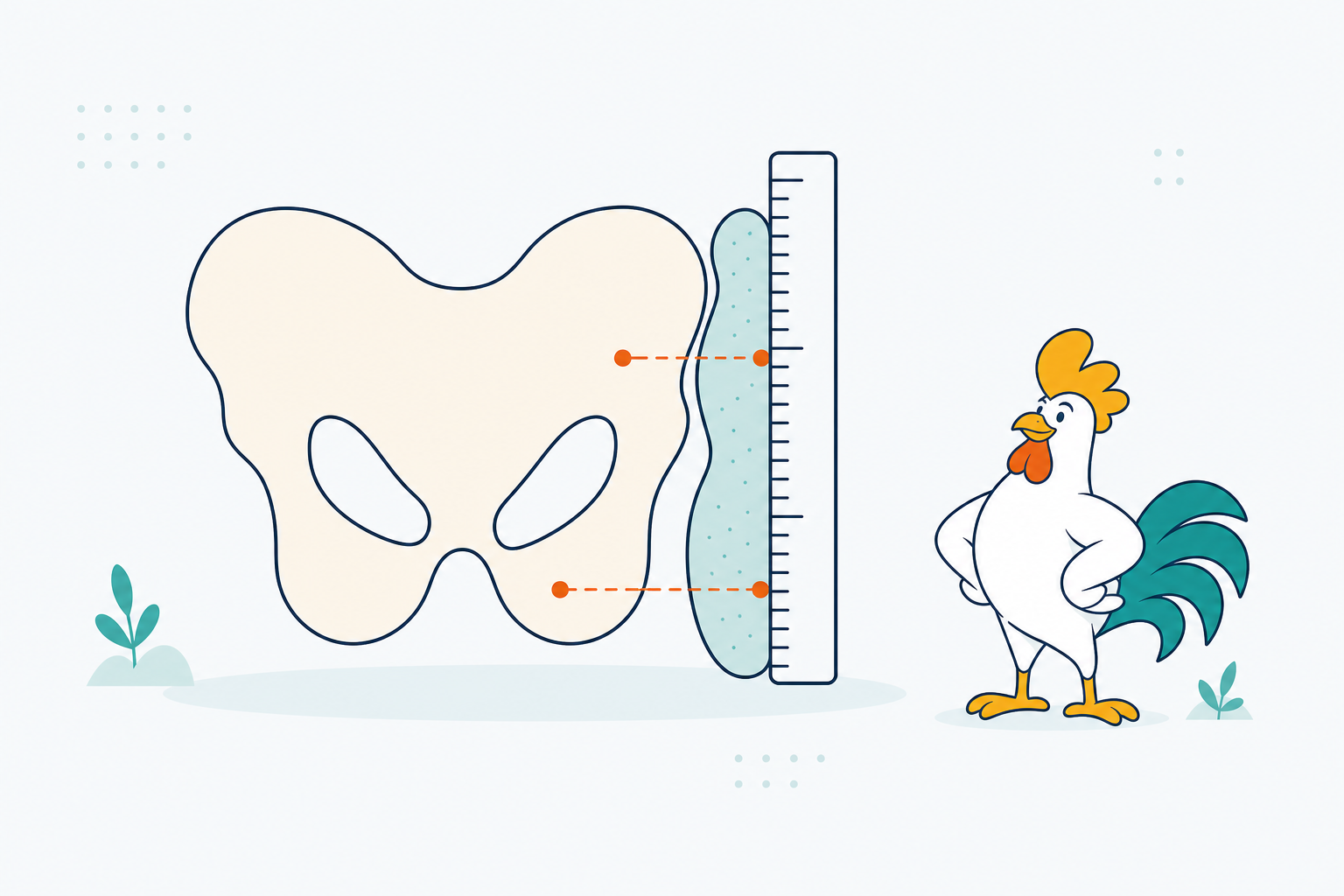
Two men can have the exact same penis and report measurements an inch apart. Neither is lying. One pressed the ruler firmly into the pubic bone; the other rested it against the skin. That single difference in technique is the whole story behind BPEL and NBPEL, and it’s why the numbers you find online are such a mess. Once you know which method produces which result, the chaos clears up, and you’ll see exactly how your own measurement stacks up against the research.
What BPEL and NBPEL actually mean
BPEL stands for bone-pressed erect length. You take a rigid ruler, lay it on top of the erect penis, and push the end firmly back into the pubic bone, past the soft fat pad in front of it, until you hit something hard that won’t compress any further. You read the number at the tip. That’s bone-pressed.
NBPEL is non-bone-pressed erect length. Same ruler, same erection, but you rest the ruler against the surface of the skin where the shaft meets the body, without pressing in. Whatever fat pad you have stays put, and the ruler starts further forward.
The difference between the two numbers is, essentially, how much soft tissue sits between your skin and your pubic bone. Bone-pressed subtracts that tissue out of the equation by going through it. Non-bone-pressed leaves it in.
One thing to say plainly up front: neither method changes your anatomy. Your penis is precisely as long as it is. BPEL and NBPEL are just two rulers placed in two slightly different spots, and the gap between them tells you about your fat pad, not your penis.
Why the research uses bone-pressed
The big numbers people quote, including the ones we build this whole site around, come from clinician-measured studies, and clinicians measure bone-pressed. The largest and most reliable dataset, Veale et al. 2015 in BJU International, pooled 15,521 men measured by health professionals using a standardized technique. The headline figure most people have seen: average erect length of 13.12 cm (5.16 in), average erect girth of 11.66 cm (4.59 in).
The logic behind pressing to the bone is straightforward. If you want one consistent number you can compare across thousands of men, you have to remove the variable that has nothing to do with the penis itself: the fat pad, which differs wildly from one man to the next, and even within the same man over time. The pubic bone is a fixed landmark. Press to it and you get a reading you can reproduce. Rest on the skin and your number drifts with every pound you gain or lose.
So when you see a percentile table like this one (also bone-pressed, from the same dataset):
- 5th percentile: 10.4 cm (4.1 in)
- 10th: 11.0 cm (4.3 in)
- 25th: 12.0 cm (4.7 in)
- 50th / median: 13.1 cm (5.2 in)
- 75th: 14.2 cm (5.6 in)
- 90th: 15.2 cm (6.0 in)
- 95th: 15.9 cm (6.2 in)
- 99th: 17.0 cm (6.7 in)
…every one of those numbers assumes the ruler went to the bone. About 90% of men land between 10.4 and 15.9 cm. Drop a non-bone-pressed measurement into a bone-pressed table and you’re comparing apples to slightly shorter apples: you’ll come out looking lower on the chart than you actually are. The percentile breakdown on our penis size statistics page, and the curve behind our calculator, are all bone-pressed for exactly this reason. We spell out the sourcing on the methodology page.
How the fat pad and your weight change the gap
The non-bone-pressed reading usually comes out about 1 to 2 cm shorter than bone-pressed, roughly half an inch to three-quarters of an inch. It’s not a fixed amount, though. It depends entirely on how thick the fat pad in front of your pubic bone happens to be.
Lean man, thin pad: the gap might be half a centimeter, barely worth mentioning. Heavier man, thick pad: the ruler has far more tissue to sink through, and the two numbers can diverge by a couple of centimeters or more. That fat pad is the suprapubic fat sitting right where the shaft enters the body, and it’s one of the first places many men carry extra weight.
This has a practical, slightly cheering consequence. Lose weight and your non-bone-pressed length goes up, not because the penis grew, but because the pad shrank and stopped burying part of the shaft. Some of the length was always there; it was just hidden. It’s also why men sometimes feel they’ve “shrunk” after gaining weight. The bone-pressed number didn’t move at all. The visible, functional length did.
One thing the fat pad doesn’t touch: girth. Circumference gets measured around the shaft, well clear of the body, so the pad is irrelevant. Bone-pressed and non-bone-pressed girth are the same number. The 11.66 cm (4.59 in) average holds regardless of method, handy, since girth matters at least as much as length, a point we get into in girth vs length.
How to measure each one properly
The tool matters more than the technique. Use a rigid ruler, not a soft tape: a tape sags and follows any upward curve, inflating your number. Get fully erect first; a partial erection reads short and inconsistent. Stand up, and point the penis straight out, parallel to the floor.
For bone-pressed (BPEL):
- Lay the ruler flat along the top of the shaft, the marked side facing up toward you.
- Press the zero end firmly into the pubic bone, compressing the fat pad until the ruler stops against bone.
- Read straight down at the tip of the glans. That’s your BPEL.
For non-bone-pressed (NBPEL):
- Same position, ruler on top.
- Rest the zero end against the skin where the shaft meets your body. Don’t press in.
- Read at the tip. That’s your NBPEL.
Measure each one two or three times and take the typical value, not the single highest reading you can coax out of the ruler. Consistency is the whole point. For girth, wrap a flexible tape around the thickest part of the shaft once; that single number works for both methods.
If you want this with diagrams and the common mistakes laid out, our how to measure guide walks through every step. And if you only ever do one, do bone-pressed. It’s the one that speaks the same language as the research.
Which number to use when comparing yourself
Simple rule: match your method to the data.
Checking yourself against our calculator, our statistics, or any clinical study? Use your bone-pressed number. Those datasets are bone-pressed, so BPEL is the fair comparison. Use your NBPEL instead and you’ll read 1 to 2 cm low and worry over nothing.
Thinking about what’s visible: what a partner sees, what shows in the mirror, what fills a pair of briefs? Non-bone-pressed is the more honest figure there, because nobody is pressing your fat pad out of the way in real life. NBPEL is your “in the world” length. BPEL is your “in the data” length. Both are true. They answer different questions.
A few reference points to put a real number in context, all bone-pressed: 5 inches sits right around the 40th percentile, squarely normal, which is the entire premise of is 5 inches normal. 5.5 inches is about the 70th percentile. 6 inches is roughly the 90th, about one man in ten. 7 inches reaches the 99.7th, something like one in 400. And 8 inches is rarer than one in 10,000, despite the internet’s apparent population of giants.
For relevance to the only audience that matters here: when researchers (Prause et al. 2015) had women select from 3D-printed models, the preference for a long-term partner came out around 16.0 cm length and 12.2 cm girth, a touch above average, with girth weighing in at least as heavily as length. Most women, in that study and others, reported being satisfied with their partner’s size. We dig into the evidence in does size matter.
A few related things worth getting straight
Bone-pressed-versus-not isn’t the only place measurements go sideways. Flaccid length is almost useless for prediction. The average sits at 9.16 cm (3.6 in), but flaccid size swings hour to hour with temperature, mood, and nerves, and tells you little about erect size. The gap between the two is the grower-vs-shower question, which has its own tool and a fuller write-up in flaccid vs erect.
Stretched length (gently pulling the flaccid penis out) averages 13.24 cm (5.21 in), close to the erect average, which is why clinicians use it as a stand-in when an erection isn’t practical to measure.
Two genres of number deserve a warning. National-average rankings are self-reported, not clinician-measured, and not representative of much; treat the country comparisons on our average penis size by country page as the curiosity they are. Same goes for those “average size by single year of adult age” charts, mostly fabricated. Growth finishes around 17 to 19, at the end of puberty, and size is essentially stable across adult life after that. We cover why in average penis size by age.
FAQ
Why is my non-bone-pressed measurement shorter than the studies say? Because the studies are bone-pressed and you measured to the skin. That 1 to 2 cm gap is your fat pad: the soft tissue in front of your pubic bone that bone-pressing compresses through and non-bone-pressing leaves in place. Re-measure pressing the ruler firmly to the bone, then compare that number to the data. You’re not below average; you were comparing two different measurements.
Does losing weight actually make my penis longer? Not the penis itself; your bone-pressed length won’t budge. But losing weight thins the fat pad, so more of the shaft sits out in front of your body where it’s visible and usable. Your non-bone-pressed length goes up, sometimes noticeably. The length was always there; the pad was just hiding part of it.
Which should I use for buying condoms or checking if I’m in the normal range? For the normal-range question, use bone-pressed and compare it to our calculator and statistics: same method as the data. For condoms, girth is what matters most, and girth is the same number either way, so it’s the one measurement this whole debate doesn’t touch. Run your circumference through the condom size calculator and you’re set.